Tag
phd
16 entries all tags
Sep 8, 2026 Sep 8, 2026 Sep 6, 2026 Sep 5, 2026 Sep 3, 2026 Sep 2, 2026 Aug 31, 2026 Aug 30, 2026 Jan 13, 2022 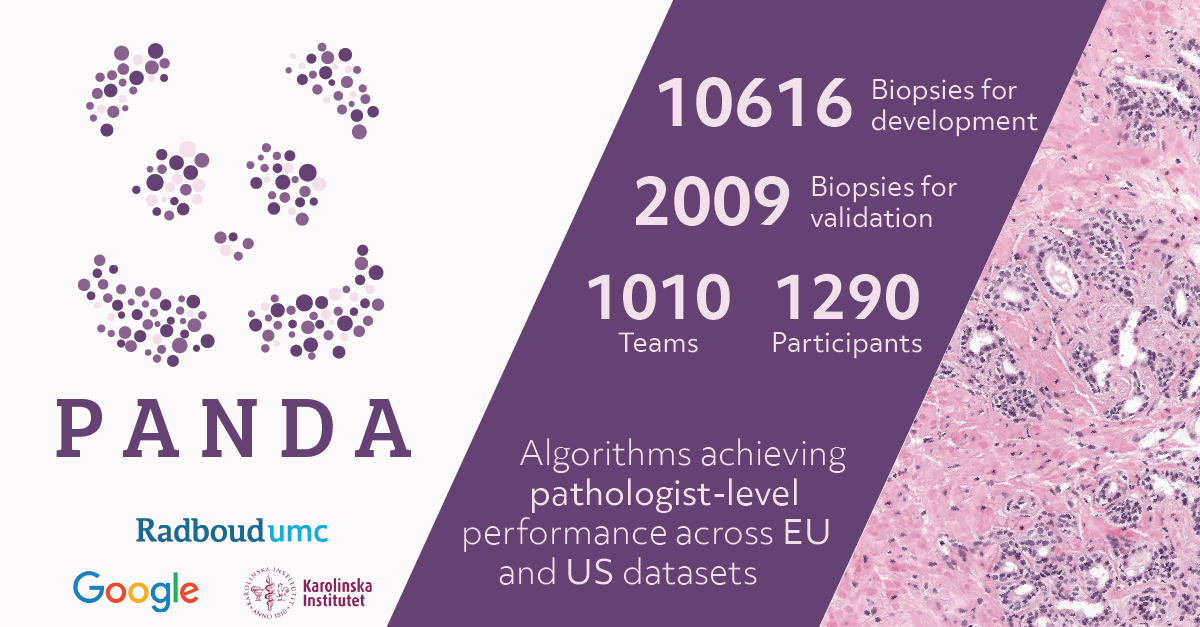
Apr 9, 2020 
Feb 25, 2020 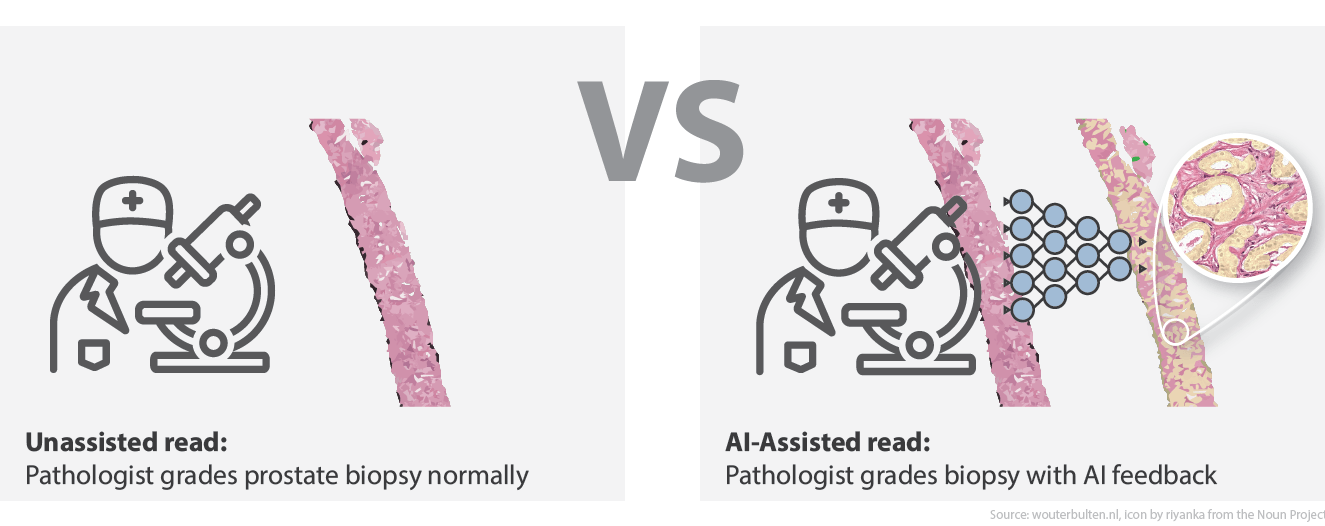
Aug 2, 2019 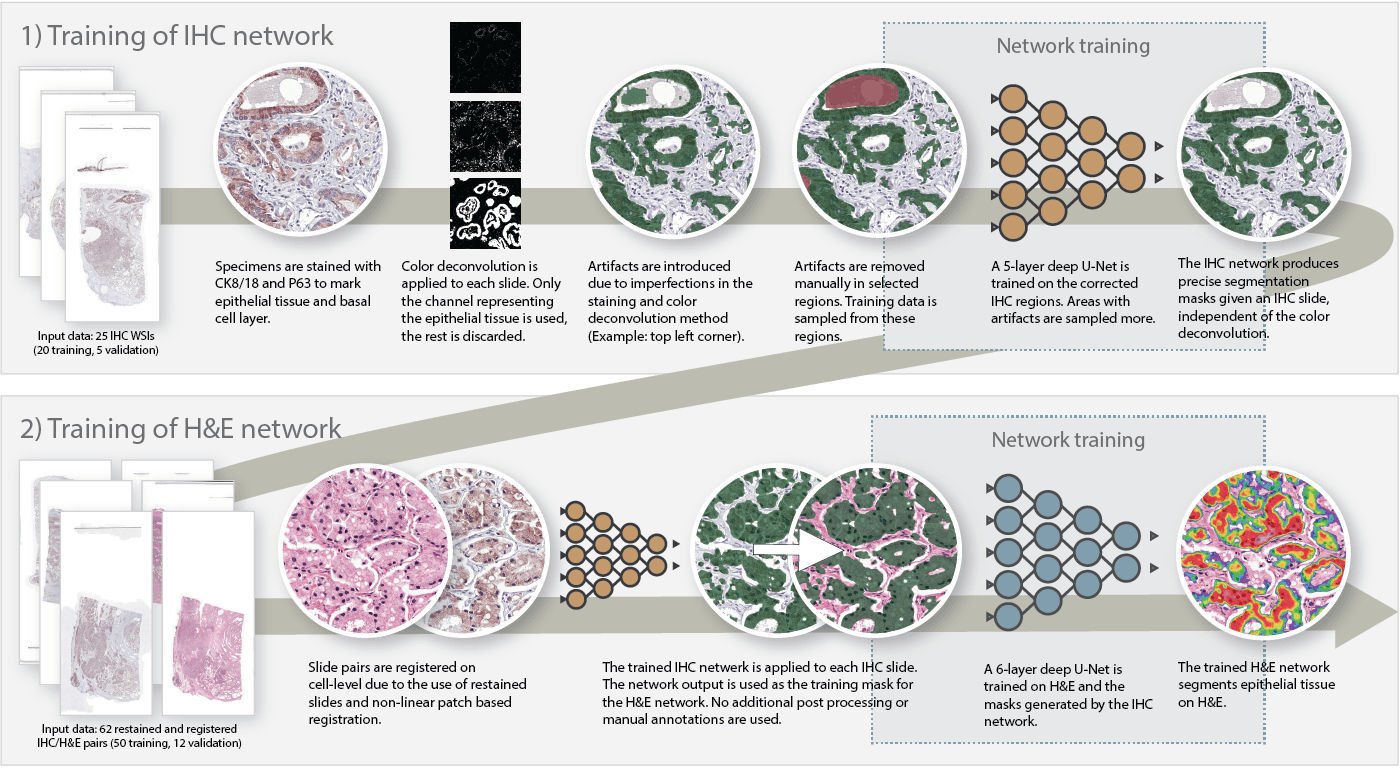
Jul 29, 2019 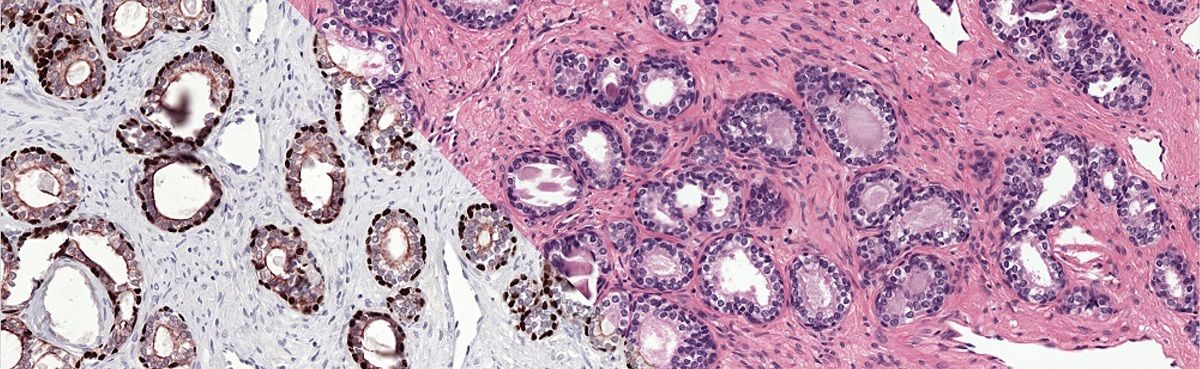
Jul 23, 2019 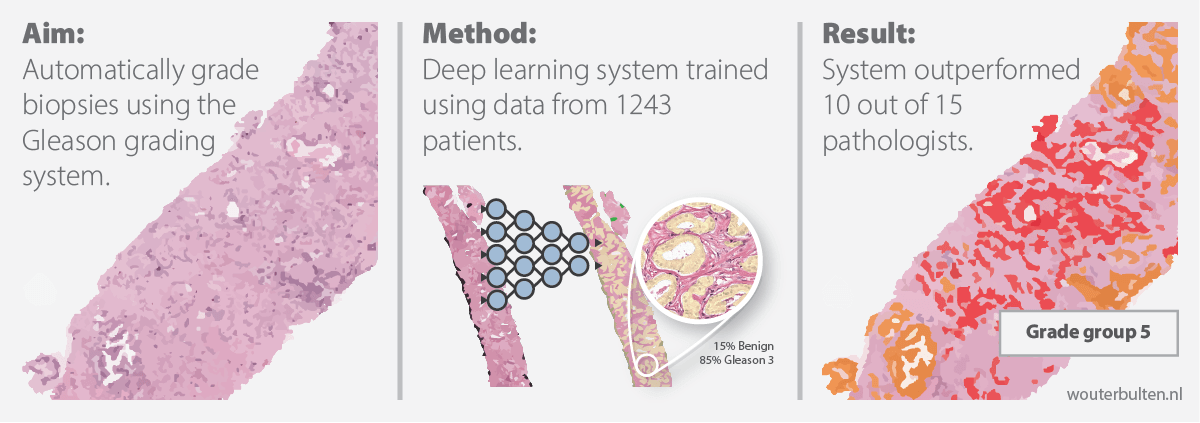
Oct 21, 2018 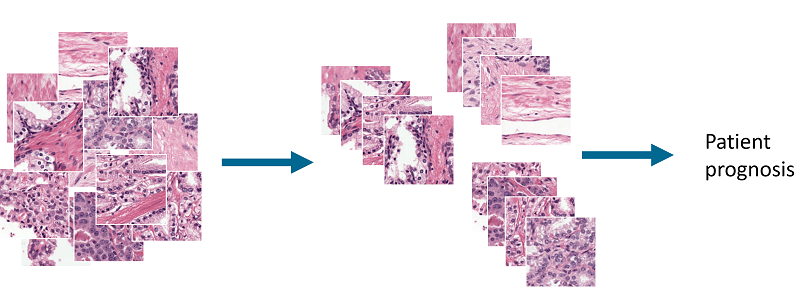
Jun 26, 2018
Samenvatting 2022 thesis · Samenvatting Het proefschrift in het kort: AI die prostaatbiopten beoordeelt haalt het niveau van pathologen, en werkt nog beter zodra pathologen het zelf gebruiken.
Summary 2022 thesis · Summary The thesis in one page: AI trained to grade prostate biopsies reaches pathologist level, and improves further once pathologists use it themselves.
General discussion 2022 thesis · Ch. 6 A look back at the four studies and forward: how AI support fits a pathologist's workflow, and what diagnostics could look like beyond Gleason grading.
AI-assisted Gleason grading 2022 thesis · Ch. 5 Fourteen pathologists graded 160 biopsies with and without AI assistance. With the AI they agreed more with the expert reference, and beat the standalone system.
The PANDA Challenge 2022 thesis · Ch. 4 A global competition on 10,616 public biopsies drew 1,290 developers. The resulting algorithms matched pathologist-level grading on blinded US and EU cohorts.
Automated Gleason grading of prostate biopsies 2022 thesis · Ch. 3 We built a deep-learning system that grades prostate biopsies without manual annotations. It matched the expert consensus and outperformed 10 of 15 pathologists.
IHC-based epithelium segmentation 2022 thesis · Ch. 2 Restaining slides with immunohistochemistry gave us a precise ground truth. One network learned epithelium on IHC, a second learned it on H&E.
General introduction 2022 thesis · Ch. 1 How prostate cancer is diagnosed and graded, why Gleason grading varies so much between pathologists, and what deep learning brings to the problem.
AI for diagnosis of prostate cancer: the PANDA challenge Artificial intelligence (AI) for prostate cancer analysis is ready for clinical implementation, shows a global programming competition, the PANDA challenge.
Improve prostate cancer diagnosis: participate in the PANDA Gleason grading challenge Can you build a deep learning model that can accurately grade prostate biopsies? Participate in the PANDA challenge
The potential of AI in medicine: AI-assistance improves prostate cancer grading In a completely new study we investigated the possible benefits of an AI system for pathologists. Instead of focussing on pathologist-versus-AI, we instead look at potential pathologist-AI synergy.
Epithelium segmentation using deep learning and immunohistochemistry We developed a new deep learning method to segment epithelial tissue in digitized hematoxylin and eosin (H&E) stained prostatectomy slides using immunohistochemistry (IHC) as reference standard.
The public PESO dataset: prostate H&E whole-side images for epithelium segmentation Public dataset of prostatectomy whole-slide images for epithelium segmentation, licensed under a BY-NC-SA Creative Commons license.
Pathologist-level Gleason grading using artificial intelligence (AI) & deep learning We developed a fully automated deep learning system to grade prostate biopsies using 5759 biopsies from 1243 patients, and showed that this system achieved pathologist-level performance.
Unsupervised Cancer Detection using Deep Learning and Adversarial Autoencoders Prostate cancer is graded based on distinctive patterns in the tissue. At MIDL2018 I presented an unsupervised deep learning method, based on clustering adversarial autoencoders, to train a system to detect prostate cancer without using labeled data.
Epithelium segmentation in H&E-stained prostate tissue using deep learning Building systems to detect tumor, in this case prostate cancer, is often hard due to a lack of data. Tumor annotations made by pathologists are often coarse due to time constraints. With this project we want to automatically refine these annotations by building a system that can automatically filter out irrelevant parts of the data.